English
 Dutch
Dutch Japanese
 Korean
 Chinese
What to Pack for Tanzania: A Season-by-Season Guide
Escape to the World’s Most Breathtaking Islands and immerse yourself in paradise.



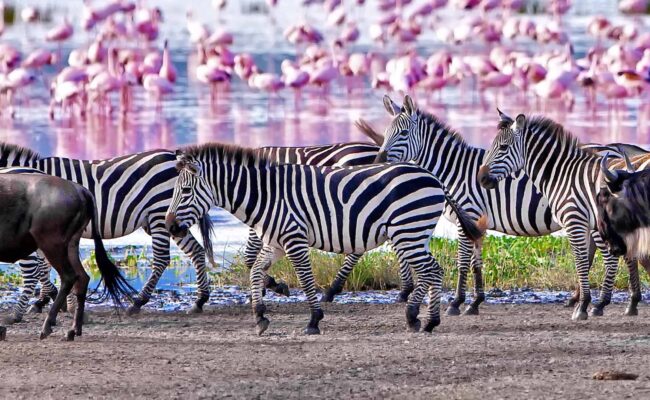
The Great Migration is often described as a single dramatic event — herds thundering across a river while crocodiles wait below. In reality, it’s a continuous, year-round movement of over a million wildebeest, alongside hundreds of thousands of zebra and gazelle, following rainfall and fresh grazing across the greater Serengeti-Mara ecosystem. Understanding its rhythm helps travelers time their visit to what they most want to see.
December–March: Calving Season, Southern Serengeti The herds gather on the short-grass plains of the southern Serengeti and Ndutu area, where an estimated 8,000 wildebeest calves are born each day during the peak of the season. This concentration of vulnerable young animals also draws major predator activity, making it one of the richest wildlife-viewing windows of the year.
April–May: The Long Rains As the dry season approaches, the herds begin moving northwest in search of remaining grazing. Parks are quieter, vegetation is lush, and rates are typically lower — a good option for travelers prioritizing value and fewer crowds over migration drama.
June–July: Central and Western Serengeti The migration moves through the central Seronera area and toward the Grumeti River in the west, where smaller but still dramatic river crossings can occur. This period offers a good balance of strong wildlife activity and manageable crowds.
July–September: The Mara River Crossings This is the season most associated with the migration in popular imagery — herds gathering at the banks of the Mara River before crossing in dramatic, chaotic surges, with crocodiles waiting in the water and predators stalking the banks. It’s the most sought-after migration window and tends to be the busiest time in the northern Serengeti.
October–November: The Return South As short rains begin, the herds turn back south through the eastern and central Serengeti, setting up for another calving season ahead.
Planning Your Visit Because the migration’s exact location shifts with rainfall patterns each year, timing alone isn’t enough — positioning matters too. We track conditions closely each season and tailor camp and lodge selection to put you in the best possible location for the time of year you’re traveling, whether that means the southern plains for calving season or a private mobile camp tracking the Mara crossings.
The Great Migration isn’t a single moment to catch — it’s a year-round cycle to plan around. With the right timing and the right guide, nearly any month in the Serengeti calendar has something extraordinary to offer.
Stories, tips, and insider knowledge from the team that knows Tanzania best — so you can travel smarter and dream bigger.
Escape to the World’s Most Breathtaking Islands and immerse yourself in paradise.
There’s a moment on every first safari when it all clicks — the dust, the silence, the sudden crackle of the radio as your guide spots something in the distance. Getting to that moment smoothly takes a little preparation. Here are seven things we wish every first-time traveler knew before setting out into Tanzania’s parks. […]