Day 1 — Arrival in Arusha & Tarangire National Park
Route: Arusha → Tarangire National Park Drive Time: Approximately 2 hours Overnight: Tarangire.
Your Tanzania journey begins in Arusha, the gateway to the northern safari circuit, sitting at the foot of Mount Meru with Kilimanjaro visible on clear mornings to the east. Your driver-guide will meet you at your hotel or Kilimanjaro International Airport and give you a full briefing on what lies ahead.
By late morning you’ll be rolling south toward Tarangire National Park — one of Tanzania’s most underrated gems, and the ideal opening act for this itinerary. Named after the Tarangire River, which runs through the park’s heart and becomes a critical water source during the dry months, Tarangire draws massive concentrations of elephants between June and October, sometimes numbering in the hundreds along the riverbanks.
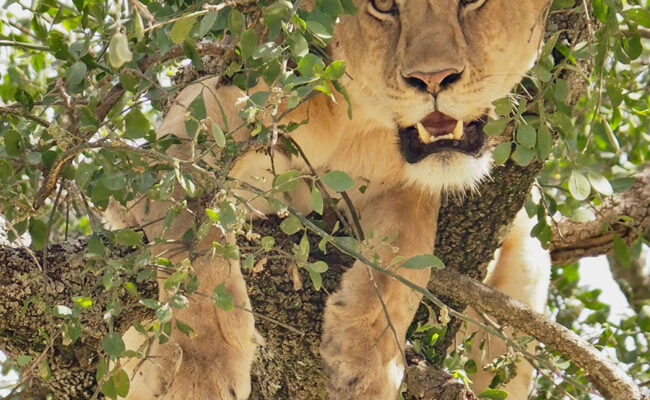
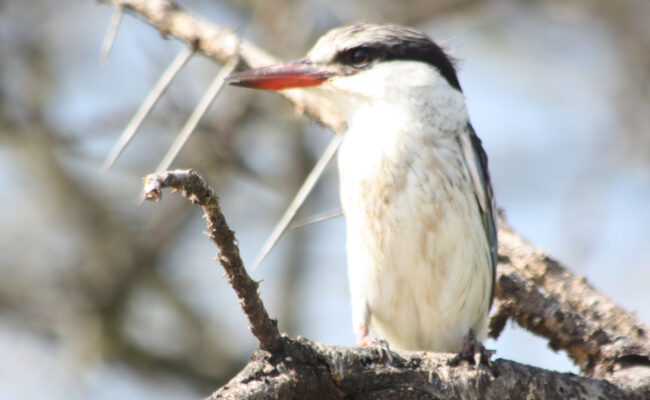
Tarangire is also the baobab park — its ancient, enormous trees dot the landscape like sentinels, some estimated to be over a thousand years old. Giraffe stretch between their branches. Buffalo graze in the shade below them. Leopards occasionally drape themselves along their thick limbs. Your afternoon game drive will take you through the river valley and surrounding woodland. Expect to see elephant herds, impala, zebra, wildebeest, warthog, giraffe, and some of the richest birdlife in Tanzania — over 550 species have been recorded here.
As the sun drops low and golden over the Tarangire River, you’ll settle in for your first night in the bush. Dinner is served as darkness falls over the plains, and the sounds of Africa take over.
Wildlife to look out for: Elephant herds, giraffe, buffalo, zebra, greater kudu, oryx, fringe-eared oryx, and a remarkable variety of birds.
Day 2 — Tarangire to Central Serengeti
Route: Tarangire → Serengeti (Seronera Valley) Drive Time: Approximately 5–6 hours (with stops) Overnight: Central Serengeti
An early morning drive through Tarangire’s quieter tracks before breakfast gives you a final hour in the park at the best time of day. Then you begin the drive north toward the Serengeti — one of the most evocative words in the Maa language, meaning “endless plains,” and a name that is entirely accurate.
The drive itself passes through traditional Maasai lands where red-cloaked herders move with their cattle across open rangeland, a sight as timeless as anything you’ll see in the parks. Your guide will share the landscape, the culture, and the story of this part of Tanzania as you travel.
By afternoon you’ll enter the Serengeti through the Naabi Hill Gate and make your descent onto the plains — a view that, no matter how many times you’ve seen it in photographs, stops you. The grass stretches to every horizon, broken by granite kopjes (rocky outcrops) and the occasional acacia tree. And somewhere out there, the herds are moving.
Your lodge or tented camp in the Seronera Valley puts you in the wildlife-rich heart of the central Serengeti, where the Seronera River provides year-round water and, with it, year-round predator activity. Late afternoon game drive on arrival.
Wildlife to look out for: Lion, leopard (particularly along the Seronera River), cheetah, spotted hyena, side-striped jackal, hippo, crocodile, and large numbers of plains game.
Day 3 — Full Day in the Central Serengeti
Route: Central Serengeti (full day) Overnight: Central Serengeti
Today is entirely yours and the Serengeti’s. You’ll spend the full day in the field, departing before sunrise with a packed breakfast box and returning only as the light fades in the evening. This is the rhythm of proper safari — patient, unhurried, and entirely in tune with the landscape.
Your guide will track the herds throughout the day, reading tracks, listening to radio communications from other guides, and watching the sky and the treelines for clues. Morning hours bring the best predator activity. Midday, when the heat rises and animals seek shade, is a good time to stop at a scenic spot for lunch and watch the world slow down around you. Late afternoon brings the light that photographers dream about — warm, low, and flattering on every animal it touches.
Depending on the time of year, you may find large wildebeest columns moving through the central corridor, or you may encounter them gathered on the short-grass plains. Your guide will know where the action is. Trust their read of the park.
Dinner tonight is back at camp, with stars overhead and the sounds of the Serengeti night closing in around you — hyena calls, the distant grunt of a lion, the crackle of the fire.
Wildlife to look out for: Wildebeest columns, large lion prides, cheetah on the open plains, leopard in the fever trees, ostrich, secretary bird, and the Serengeti’s spectacular sunrise and sunset.
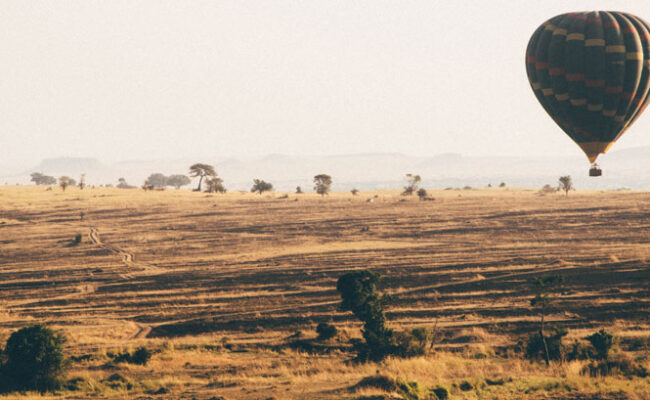
Optional add-on: Hot air balloon safari over the Serengeti at dawn, with a champagne bush breakfast upon landing. This experience must be booked in advance and is one of the most spectacular ways to see the plains from above. Ask us about availability.
Day 4 — Central Serengeti to Northern Serengeti (Mara River)
Route: Seronera → Kogatende / Northern Serengeti Drive Time: Approximately 3–4 hours Overnight: Northern Serengeti
Today you begin your journey north — following the migration’s own direction, though in considerably more comfort. The drive through the central and northern Serengeti is itself a game drive, passing through the Lobo area and its dramatic granite kopjes before descending toward the Mara River and the northern ecosystem.
The northern Serengeti is wilder, more remote, and less visited than the south — you’ll notice the change in vegetation, the change in light, and a welcome drop in traffic as you leave the more popular central areas behind. This is where the migration drama intensifies between July and October, as the herds build up on the southern bank of the Mara River, waiting for the right moment to cross.
Your tented camp in the north is positioned to put you within reach of the river at first light. Tonight, as you fall asleep to the sound of the bush, hundreds of thousands of wildebeest are somewhere nearby, restless and moving.
Wildlife to look out for: Moving herds en route, plains game, giraffe on the wide open northern plains, and increasing signs of big cat activity as predator numbers follow the migration north.
Day 5 — Full Day at the Mara River
Route: Northern Serengeti / Mara River (full day) Overnight: Northern Serengeti
This is the day many travelers consider the centerpiece of their Tanzania journey, and for good reason.
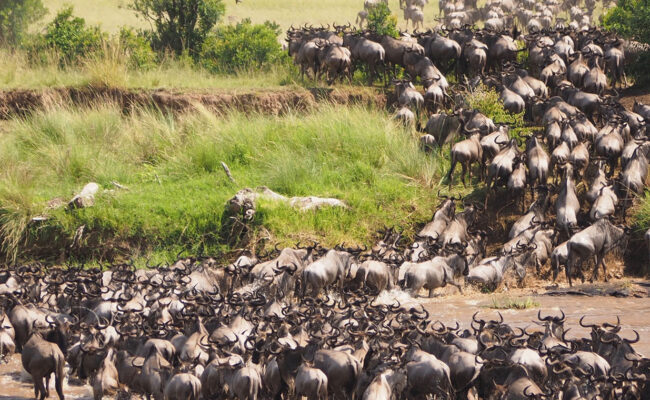
The Mara River crossings are elemental — raw, chaotic, and deeply moving. Wildebeest gather on the southern bank in their thousands, milling, edging forward, retreating, uncertain. Then, triggered by some impulse no biologist has ever fully explained, they surge. The first animal commits and thousands follow, tumbling, scrambling, and swimming across the current while Nile crocodiles — some of the largest in Africa — launch from the deep water with terrifying speed.
Not every day at the Mara produces a crossing. The herds have their own logic and their own schedule. But your guide will read the conditions and position you well. Even on days without a dramatic crossing, the Mara offers extraordinary wildlife — enormous crocodiles basking in the shallows, hippo pods submerged to their eyes in the deeper pools, black-and-white colobus monkeys in the riverine forest, and the patient presence of lion and cheetah working the banks.
You’ll spend the full day at and around the river, departing camp before sunrise and returning after the evening light has gone. Lunch is served in the field. This is a day for patience and presence — and more often than not, it rewards both.
Wildlife to look out for: Wildebeest, Nile crocodile, hippo, lion, cheetah, black-and-white colobus, topi, eland, and a remarkable variety of raptors including martial eagle and bateleur.
Day 6 — Northern Serengeti to Ngorongoro Conservation Area
Route: Northern Serengeti → Ngorongoro Crater Rim Drive Time: Approximately 5–6 hours Overnight: Ngorongoro Crater Rim
You leave the north with full hearts and camera cards, heading south and east toward the highlands of the Ngorongoro Conservation Area. The landscape changes gradually — the flat Serengeti plains give way to rolling hills, acacia woodland, and eventually the cool highland air of the crater rim.
Ngorongoro Crater is a collapsed volcanic caldera, roughly 20 kilometers across and 600 meters deep, containing a nearly self-sufficient ecosystem that has remained largely intact for thousands of years. It is home to an estimated 25,000–30,000 animals, including some of Africa’s last viable populations of black rhino.
Tonight you stay on the crater rim, at altitude, with temperatures that drop significantly after dark. Dinner under the highland sky has its own magic, different from the warmth of the plains. Wrap up and step outside — on a clear night, the stars at 2,400 meters are extraordinary.
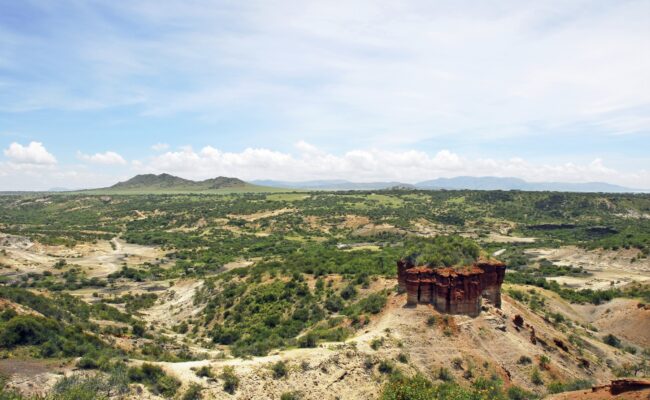
En route stop: Olduvai Gorge (Oldupai), one of the most important paleoanthropological sites in the world, where the Leakey family discovered fossils and tools that helped establish this region as the cradle of early human evolution. A brief guided visit is worth the stop.
Day 7 — Ngorongoro Crater & Return to Arusha
Route: Ngorongoro Crater → Arusha Drive Time: Approximately 5–6 hours (including crater time) Departure: Arusha
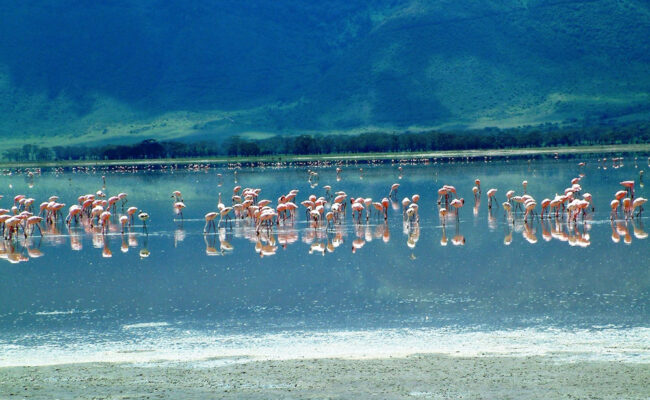
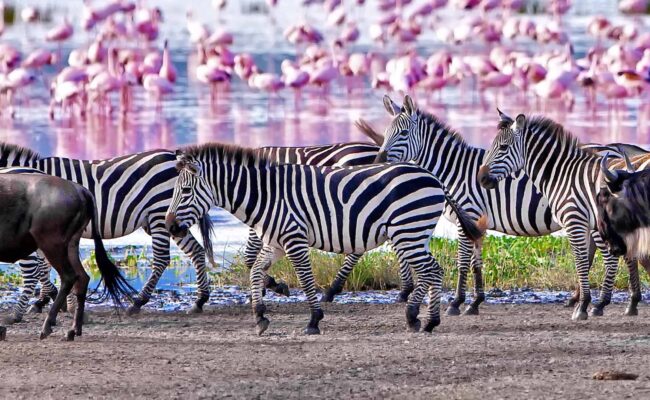
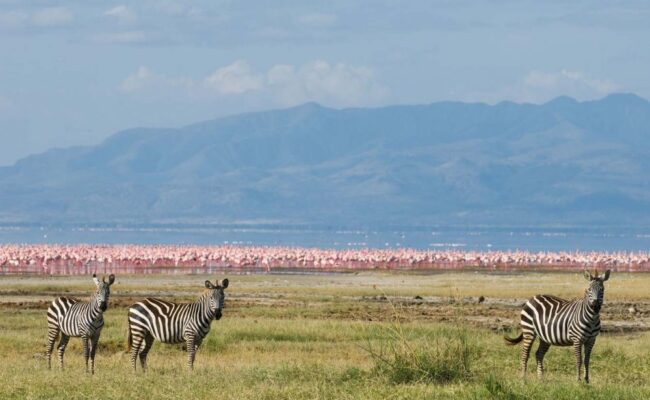
An early morning descent into the crater floor as mist still hangs in the valley below. The Ngorongoro Crater offers a different kind of safari from the open Serengeti — more intimate, with wildlife concentrated in a defined space, making sightings feel both reliable and intense. In a single morning on the crater floor you might encounter lion, spotted hyena, golden jackal, black rhino, elephant, hippo, flamingo-lined soda lake shores, and vast herds of wildebeest and zebra that never leave this sheltered world.
Your guide will spend three to four hours on the crater floor before the ascent back to the rim and the drive toward Arusha, arriving by late afternoon. There will be time for a final lunch along the way, a chance to reflect on everything you’ve seen, and space to begin figuring out when you’ll be coming back.
Because you will come back.
Wildlife to look out for: Black rhino (rare and significant), lion prides on the crater floor, spotted hyena clans, elephant bulls, hippo, flamingo, zebra, wildebeest, and golden jackal.
Accommodation Options
We offer this itinerary across three accommodation tiers. All options include experienced guides, private vehicles, and full board on safari days.
Standard (Comfortable Lodge/Camp)
Clean, comfortable lodges and fixed tented camps with en-suite facilities, hot showers, and included meals. Great value without compromising on experience. Example properties: Tarangire Safari Lodge, Seronera Wildlife Lodge, Mara Simba Lodge, Ngorongoro Sopa Lodge
Mid-Range (Elevated Comfort)
Stylishly furnished tented camps and boutique lodges with more personalized service, better positions within the parks, and upgraded dining experiences. Example properties: Lemala Ewanjan Serengeti, Kubu Kubu Tented Lodge, Ngorongoro Farm House
Luxury (Premium Safari)
Intimate, high-end camps with exceptional service, gourmet meals, premium bar, private guides, and in some cases exclusive concession access away from park roads. Example properties: Four Seasons Safari Lodge Serengeti, Singita Mara River Tented Camp, &Beyond Ngorongoro Crater Lodge
 English
 Dutch
Dutch Japanese
 Korean
 Chinese

 Support info@manyangatours.com