Manyanga Tours Ltd logoMANYANGATOURS LTD
Plan Your Trip
Manyanga Tours — 6-Day Kilimanjaro Climb
Kilimanjaro Expedition

Manyanga Tours — 6-Day Kilimanjaro Climb

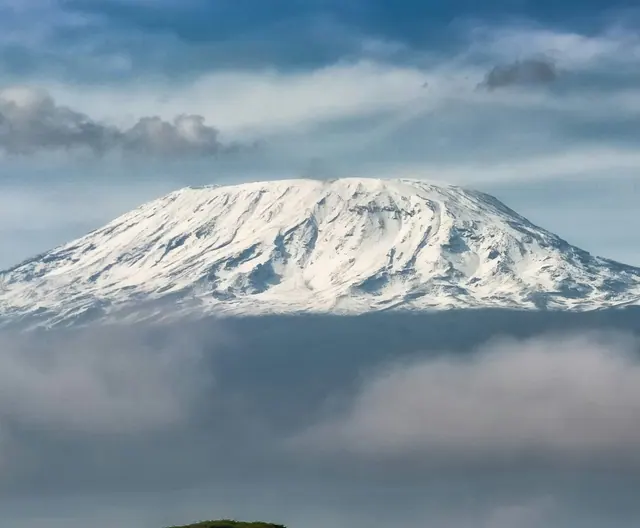
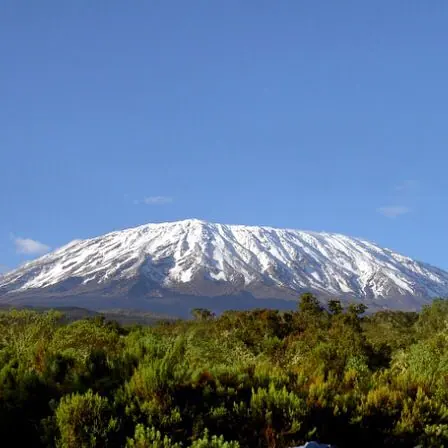
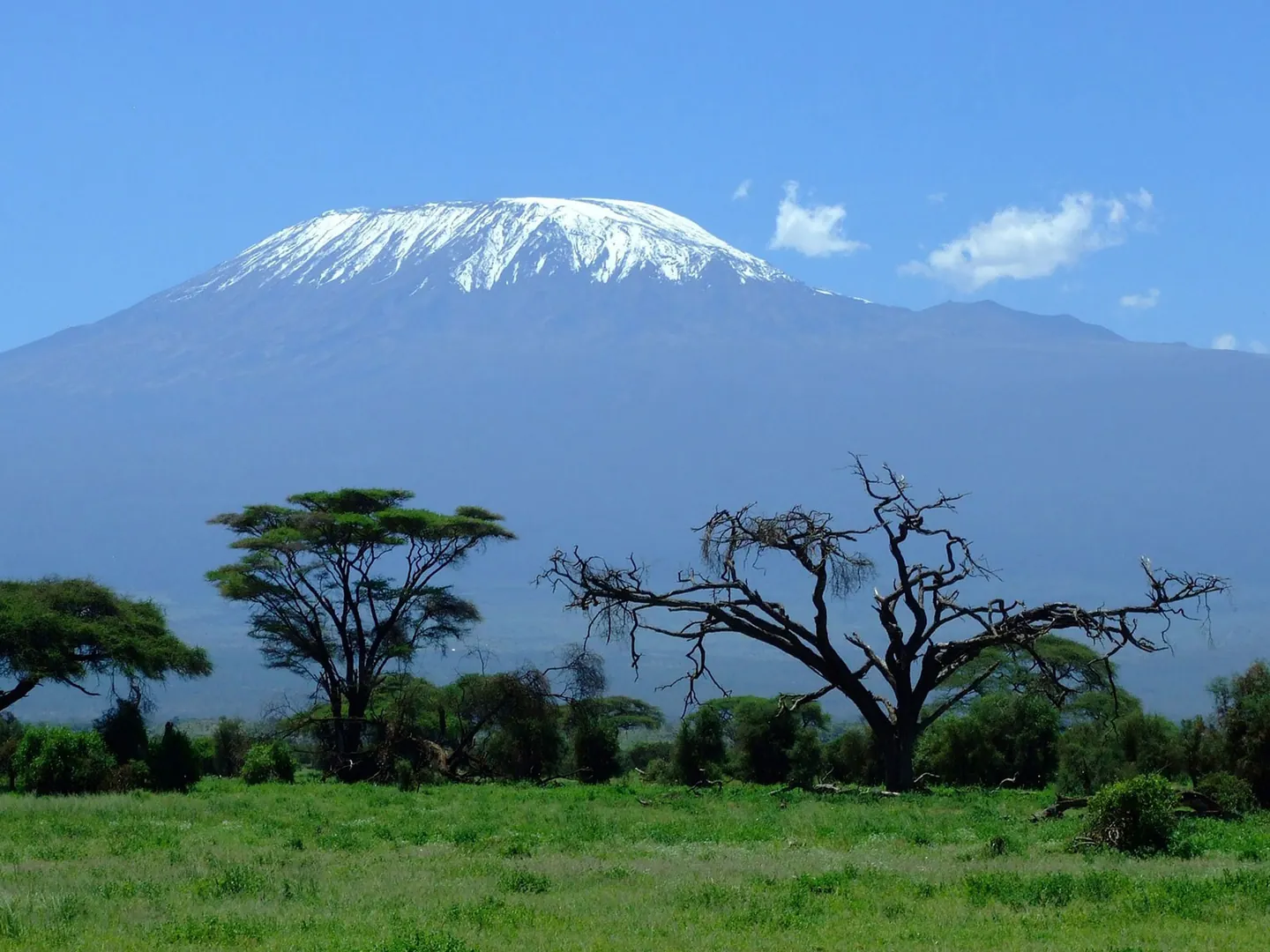
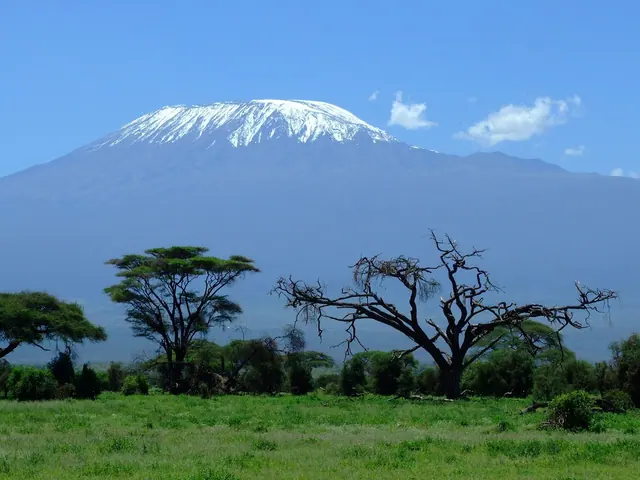
At 5,895 meters, Kilimanjaro is the highest peak in Africa and the tallest free-standing mountain in the world. It is also, with the right preparation and the right team, one of the most achievable high-altitude summits on Earth — no ropes, no ice axes, no technical climbing experience required. Just fitness, determination, and a guide who has done this many times before. The Machame Route is the most popular route on the mountain, and for good reason. It is scenic, well-varied in terrain, and — critically — includes enough altitude gain and loss through the middle days to give your body the best possible chance to acclimatize. Climbers call it the Whiskey Route, a nod to its reputation as the bold, adventurous alternative to the more gradual Marangu (“Coca-Cola”) Route. It is harder. It is also more rewarding. We organize Machame climbs with experienced mountain guides, a full support crew, and a safety-first approach at every stage. The mountain demands respect. Our job is to help you give it that respect — and reach the top. Duration: 6 Days / 5 Nights on the mountain + arrival day in Arusha/Moshi Route: Machame Gate → Uhuru Peak → Mweka Gate Highest Point: Uhuru Peak, 5,895 m Difficulty: Challenging — no technical skill required, but strong cardiovascular fitness is essential Best Timing: January–March and June–October (clearest skies, best summit conditions)

6 Days Ask Our Mountain Team From Custom Quote
Duration 6 Days
Difficulty Ask Our Mountain Team
Starting Price Custom Quote
Summit Goal Uhuru Peak
Route Overview

Your Path Toward Uhuru Peak

Every Kilimanjaro route has its own rhythm, scenery, acclimatization profile, and level of challenge. This plan is designed to help you move steadily with informed mountain support.

At 5,895 meters, Kilimanjaro is the highest peak in Africa and the tallest free-standing mountain in the world. It is also, with the right preparation and the right team, one of the most achievable high-altitude summits on Earth — no ropes, no ice axes, no technical climbing experience required. Just fitness, determination, and a guide who has done this many times before.
The Machame Route is the most popular route on the mountain, and for good reason. It is scenic, well-varied in terrain, and — critically — includes enough altitude gain and loss through the middle days to give your body the best possible chance to acclimatize. Climbers call it the Whiskey Route, a nod to its reputation as the bold, adventurous alternative to the more gradual Marangu (“Coca-Cola”) Route. It is harder. It is also more rewarding.
We organize Machame climbs with experienced mountain guides, a full support crew, and a safety-first approach at every stage. The mountain demands respect. Our job is to help you give it that respect — and reach the top.
Duration:
6 Days / 5 Nights on the mountain + arrival day in Arusha/Moshi
Route:
Machame Gate → Uhuru Peak → Mweka Gate
Highest Point:
Uhuru Peak, 5,895 m
Difficulty:
Challenging — no technical skill required, but strong cardiovascular fitness is essential
Best Timing:
January–March and June–October (clearest skies, best summit conditions)
Day by Day

Kilimanjaro Route Itinerary

Read this as a day-by-day mountain journey, from the first gate to changing climate zones, recovery time, summit preparation, and the descent.

Day 1

Day 1 — Machame Gate to Machame Camp

Distance:
~11 km |
Hiking Time:
5–7 hours
Altitude:
1,800m → 3,021m |
Overnight:
Machame Camp
Meals:
Lunch (trail), Dinner (camp)
The climb begins at Machame Gate, where your permits are checked, porters are organized, and the mountain formally begins. The first day takes you through dense montane rainforest — mossy, cool, and alive with birdsong and the occasional colobus monkey moving through the canopy overhead. The trail is well-worn and consistently uphill, gaining over 1,200 meters before reaching Machame Camp.
At camp, the support crew will have your tent pitched, hot water waiting, and dinner on the way. The first evening on the mountain is usually one of excitement and mild tiredness — enjoy it. The days ahead are harder and better.
What to expect:
Mud on the trail (rainforest = rain), cloud cover clearing in the late afternoon, your first sight of the mountain above the treeline.

Day 2

Day 2 — Machame Camp to Shira Camp

Distance:
~5 km |
Hiking Time:
4–6 hours
Altitude:
3,021m → 3,840m |
Overnight:
Shira Camp
Meals:
Breakfast, Lunch (trail), Dinner (camp)
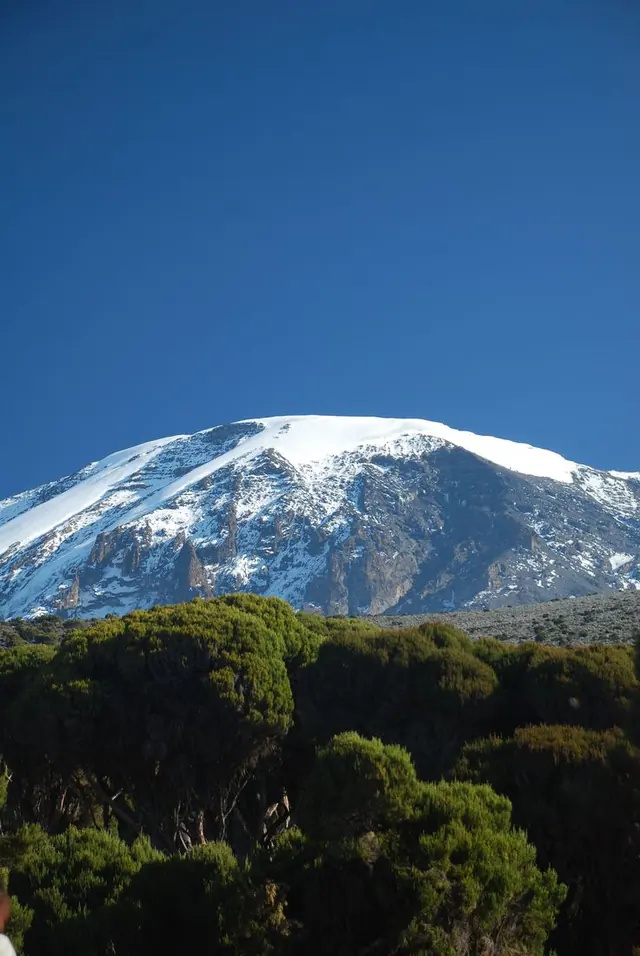
Leaving the rainforest behind, the trail climbs through heath and moorland — a dramatic change of scenery where giant heather trees give way to open moorland, tussock grass, and the first unobstructed views of Kilimanjaro’s upper ridges. The mountain begins to show itself properly today, and most climbers stop to stare more than once.
The pace is deliberately slow —
pole pole
(slowly, slowly) is the guiding principle on Kilimanjaro, and your guide will set a rhythm that prioritizes acclimatization over speed. Shira Camp sits on the ancient Shira Plateau, one of the mountain’s three volcanic cones, with sweeping views in every direction and, on clear evenings, a sunset that is hard to adequately describe.
What to expect:
First signs of altitude — some headache or breathlessness is normal. Drink water consistently.

Day 3

Day 3 — Shira Camp to Barranco Camp via Lava Tower

Distance:
~10 km |
Hiking Time:
6–8 hours
Altitude:
3,840m → 4,630m (Lava Tower) → 3,976m (Barranco Camp) |
Overnight:
Barranco Camp
Meals:
Breakfast, Lunch (at Lava Tower), Dinner (camp)
The most important acclimatization day of the climb, and one of the most dramatic. You ascend from Shira Plateau through the alpine desert zone — a stark, boulder-strewn landscape where almost nothing grows and Kilimanjaro’s glaciers come into view for the first time — to Lava Tower at 4,630 meters. This is where the thin air makes itself known: steps feel heavier, breath comes shorter, and the body begins the work of adapting.
Lunch at Lava Tower, then the descent to Barranco Camp at 3,976 meters — losing over 600 meters in altitude while your body retains the acclimatization benefit of the high point. This is the “climb high, sleep low” principle in action.
Barranco Camp sits beneath the imposing Barranco Wall and has some of the most dramatic mountain scenery of the entire route. The Southern Ice Fields of Kilimanjaro are visible above. On clear nights, the stars at this altitude are unlike anything at sea level.
What to expect:
This is the hardest day so far. Altitude symptoms are most likely here. Be honest with your guide about how you feel.

Day 4

Day 4 — Barranco Camp to Karanga Camp

Distance:
~5 km |
Hiking Time:
4–5 hours
Altitude:
3,976m → 4,035m |
Overnight:
Karanga Camp
Meals:
Breakfast, Lunch (trail), Dinner (camp)
The day begins with the Barranco Wall — a near-vertical scramble of roughly 300 meters that looks more intimidating from below than it proves to be in practice. Handholds are good, your guide leads the way, and porters ascend the same wall carrying loads that make most climbers feel both grateful and slightly embarrassed. The view from the top of the wall, looking back across the Barranco Valley and out toward the plains far below, is one of the climb’s defining moments.
Beyond the wall, the trail follows the mountain’s southern face along a ridgeline with views in both directions — the plains of Tanzania to the south, the upper slopes and glaciers of Kilimanjaro to the north. A shorter day by distance, designed to keep energy in reserve for what lies ahead.
What to expect:
The Barranco Wall scramble (hands and feet, not technical — everyone makes it). A well-earned sense of progress by afternoon.

Day 5

Day 5 — Karanga Camp to Barafu Camp

Distance:
~5 km |
Hiking Time:
4–5 hours
Altitude:
4,035m → 4,673m |
Overnight:
Barafu Camp (summit base camp)
Meals:
Breakfast, Lunch (trail), Early Dinner (camp)
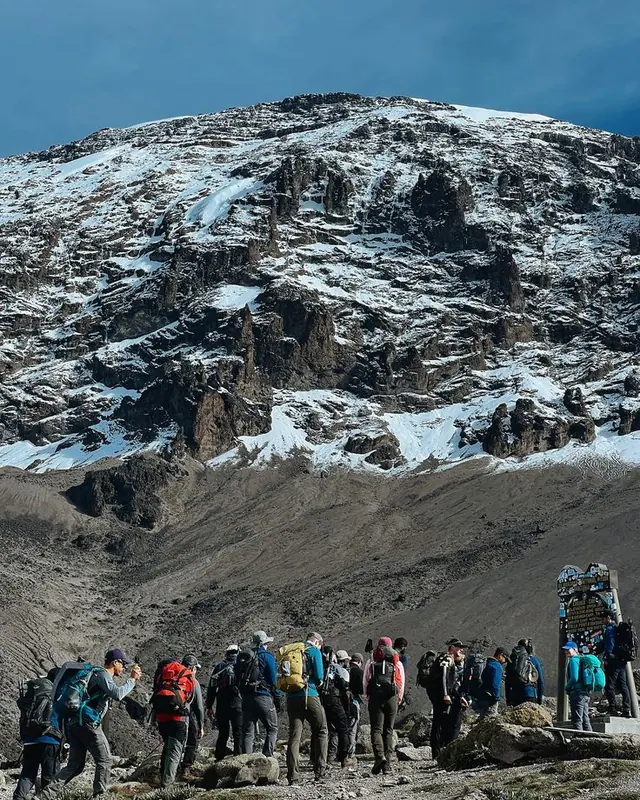
A shorter but significant day — the final push to Barafu, the launch pad for the summit. The trail ascends steadily through loose rock and scree, and the landscape at this altitude is lunar: almost nothing lives here, the air is visibly thinner, and Kilimanjaro’s glaciers and the Rebmann and Ratzel Glaciers are now close enough to study in detail.
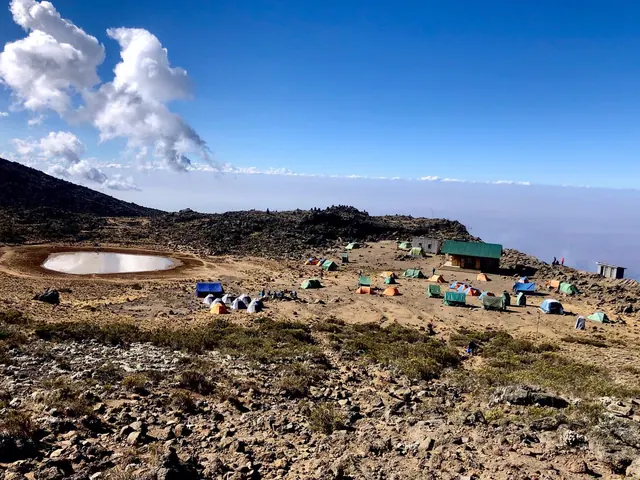
Barafu Camp sits at 4,673 meters on a rocky ridge exposed to wind from both sides. It is not the most comfortable night of the climb. That is entirely by design — you arrive early enough to rest, eat a full meal, and attempt to sleep from around 7 p.m. before your midnight wake-up call for the summit push.
Hydrate well. Eat even if your appetite has faded — your body needs fuel for what comes next. Brief yourself with your guide on the summit night plan and go to sleep as early as you can manage.
What to expect:
Cold, wind, some nerves. All appropriate. Your guide has been here many times. Trust the process.

Day 6

Day 6 — Summit Night & Descent to Mweka Gate

Distance:
~15 km |
Hiking Time:
12–14 hours total
Altitude:
4,673m → 5,895m → 3,100m |
Overnight:
N/A — descend to gate and transfer to Moshi
Meals:
Midnight snack (pre-summit), Breakfast (Crater Rim), Lunch (Mweka Camp)
Midnight. Your guide wakes you in the dark and cold. Headlamps go on. Layers go on. Hot tea is served. And the summit push begins.
The ascent from Barafu to Uhuru Peak takes 6–8 hours and is, in the honest language of the mountain, brutal. The trail switchbacks steeply up loose scree and volcanic rock at an altitude where each step demands deliberate effort. The cold — typically between -10°C and -20°C, amplified by wind chill — is the most unforgiving element. Your guide sets a pace that is almost frustratingly slow, and that pace is the reason people reach the top.
Stella Point (5,756m) is the crater rim, reached typically around sunrise — and the sunrise from Stella Point, with the glacier walls catching the first light and the curvature of the Earth beginning to show on the horizon, is the moment most climbers remember most clearly for the rest of their lives. From Stella Point, the trail follows the crater rim for another 45 minutes to Uhuru Peak — the true summit, the highest point in Africa.
Your guide will give you time at the top. Take the photograph. Look in every direction. Breathe the thin air. You are standing on the roof of Africa.
The descent is long and the legs will know it. From Uhuru the trail drops steeply back to Barafu for a rest and a meal, then continues down through the heath zone to Mweka Camp or directly to Mweka Gate depending on conditions and timing. Your vehicle meets you at the gate for the transfer back to your Moshi hotel.
What to expect:
The hardest physical challenge of the trip, followed immediately by the most powerful reward. The descent is tiring but straightforward. Most climbers arrive at the gate with empty legs and full hearts.

Included

What your climb includes

Guides, porters, cooks, meals, and camp or hut support form the team behind your daily progress; your proposal will confirm the exact services for this route.

  • All airport and hotel transfers (Arusha/Moshi)
  • One night hotel accommodation in Moshi before the climb (bed and breakfast)
  • All 5 nights camping on the mountain (tent, sleeping mat, dining tent, toilet tent)
  • Professional lead guide and assistant guide
  • All Kilimanjaro National Park fees, conservation fees, and rescue fees
Not Included

Items to arrange separately

  • Visa Fees & Processing.
  • Personal Expenses (Shopping, Souvenirs, Tips, etc.)
  • Optional Excursions & Activities.
  • Meals Not Mentioned in Itinerary.
  • Travel Insurance (if not included).
Mountain Scenes

Route Gallery

Route map

Manyanga Tours — 6-Day Kilimanjaro Climb from trailhead to summit.

The detailed itinerary above identifies the actual overnight stops available in the admin-managed route record. This visual explains the general climb rhythm: approach, acclimatization, high camp, summit attempt, and descent.

TRAILHEADACCLIMATIZATIONHIGH CAMPUHURU PEAK 5,895 M
Group or private

Book this route in the style that fits you.

Scheduled groups follow published dates and shared arrangements. Private climbs give your party more control over dates, hotel level, and the wider Tanzania itinerary.

Join a Manyanga Tours — 6-Day Kilimanjaro Climb group

Check live departures for this route, compare dates, and review the shared room and tent arrangements before requesting a place.

Plan a private Manyanga Tours — 6-Day Kilimanjaro Climb climb

Choose the dates and ask our expert to coordinate hotel level, transfers, preparation, and any safari or Zanzibar extension.

Route FAQ

Questions specific to Manyanga Tours — 6-Day Kilimanjaro Climb.

Final advice depends on your dates, fitness, previous altitude experience, and the exact duration selected.

Why choose a longer version of this route?

Additional time can create a more gradual rhythm and more opportunity to acclimatize. It does not guarantee a summit, but it may improve the quality of preparation.

Can this route be booked privately?

Yes. Private climbs can be built around your available dates and combined with safari or Zanzibar.

Are rooms and tents shared?

Mountain tents or huts are normally shared according to the route arrangement. Hotel nights are commonly shared on a twin basis, with single-room upgrades available at additional cost.

What happens if I do not have all the gear?

Manyanga helps you check the required list and explains which suitable items may be rented locally before the climb.

Climb With Confidence

Does this route fit your summit goal?

Share your dates, fitness, trekking experience, preferred pace, and group size. We will explain how this route fits and can also plan a safari or Zanzibar extension after the climb.

Explore Next

Other Kilimanjaro Routes

Compare days, scenery, difficulty, and acclimatization before deciding; our mountain team can talk through the tradeoffs with you.

Schedule a WhatsApp call with our expert

Share the essentials and our Tanzania-based team will confirm a practical time to speak on WhatsApp.

WhatsApp